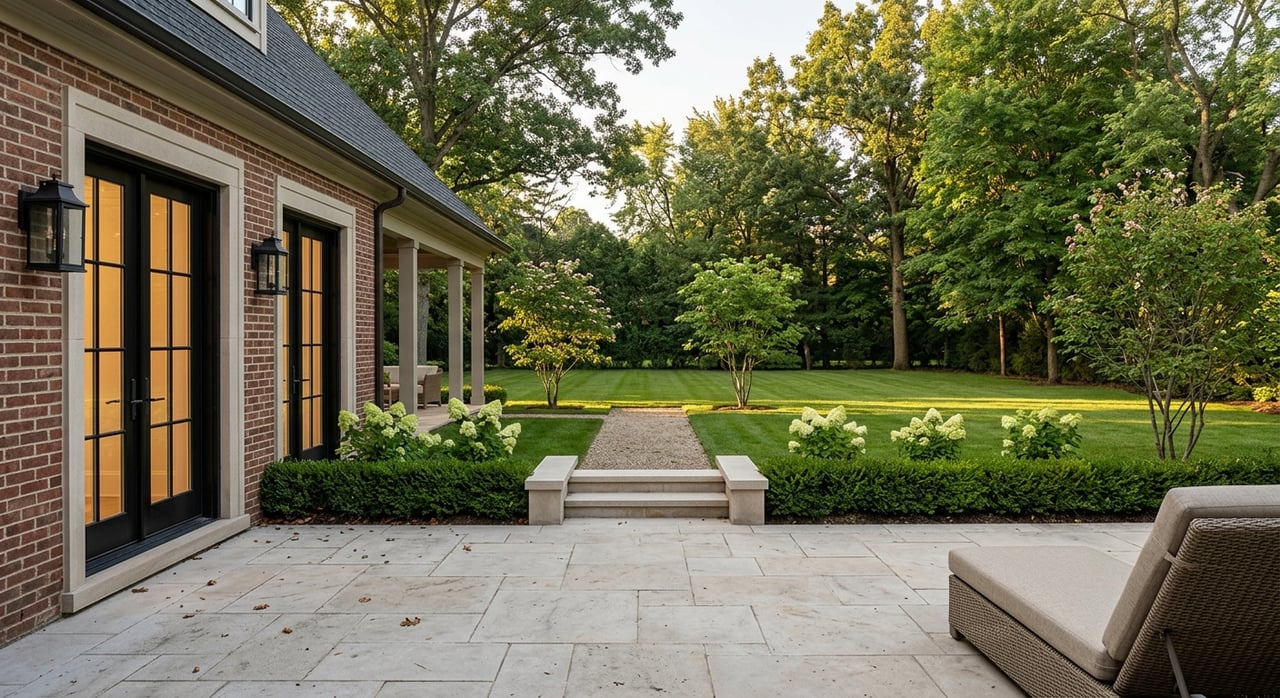
If your current home no longer fits the way you live, your next move may come down to one key question: do you want more space around your home, or more flexibility in the way you live day to day? That is often the real choice between Chesterfield and Wildwood. Both communities sit in the west St. Louis County market and both attract buyers looking for more room, stronger long-term fit, and a higher-end suburban setting. In this guide, you will see how Chesterfield and Wildwood compare on lot size, housing options, outdoor access, commute patterns, and resale considerations so you can make a smarter next move. Let’s dive in.
Chesterfield vs. Wildwood at a glance
At a high level, Chesterfield and Wildwood serve two different versions of an upsizing move.
Chesterfield is the more compact option. Census Reporter places Chesterfield at 49,574 residents across 31.8 square miles, and the city describes itself as about 32 square miles and roughly 22 miles from downtown St. Louis. Wildwood is more spread out, with 35,133 residents across 66.7 square miles, creating a lower-density feel with more room between homes.
That difference shapes daily life. Chesterfield often feels more conventionally suburban and more connected to major corridors. Wildwood tends to feel more land-rich, more private, and more destination-oriented.
Home values and move-up expectations
Neither city is a budget move-up market. Based on ACS data reported through Census Reporter, the median owner-occupied home value is $472,500 in Chesterfield and $495,800 in Wildwood.
Household incomes also reflect the upper-tier nature of both markets. Median household income is $133,037 in Chesterfield and $161,060 in Wildwood. For most upsizers, the choice is less about finding a cheaper option and more about deciding what type of space and setting matters most.
Lot size is the biggest difference
If you are upsizing specifically for land, Wildwood usually has the edge.
According to Wildwood zoning and planning materials, no authorized minimum lot size in the suburban residential area may be less than 15,000 square feet, and no lot in the non-urban residential area may be less than one acre. The city’s master plan also notes that non-urban residence districts typically include lots of three acres or larger, reinforcing Wildwood’s emphasis on preserving rural areas while still allowing growth. You can see that framework in the city’s planning documents.
Chesterfield offers more variety. Official planning materials show estate districts with minimum lot sizes ranging from one acre down to 21,780 square feet, and planned residential examples with 22,000-square-foot lots. Chesterfield also includes a broader mix of housing formats in some areas, including single-family homes, townhomes, and condominiums, as reflected in city planning materials.
For you, that means the decision is pretty practical:
- Choose Wildwood if your top priority is a larger yard, more setback, more buffer, or a more estate-like setting.
- Choose Chesterfield if you want a larger home but do not necessarily need a rural-lot profile.
- Choose Chesterfield if you value more housing-type options within a similar part of west county.
Housing variety changes your options
Upsizing does not always mean the same thing. For one buyer, it means more square footage. For another, it means moving from a townhome to a detached home. For someone else, it means gaining usable outdoor space without taking on acreage.
This is where Chesterfield often stands out. Its wider range of residential formats can give you more ways to move up without stretching into a larger-lot lifestyle. That flexibility can matter if you want more house, but still want a familiar suburban layout and easier access to shopping, services, and major routes.
Wildwood tends to be more specialized. Its lower-density character can be a great match if your ideal next home includes land, privacy, and a setting that feels more tucked away. If that is your goal, Wildwood may feel like a clearer lifestyle upgrade rather than just a square-footage upgrade.
Trails and outdoor lifestyle
If outdoor access is a big part of your decision, both cities offer strong options, but in different ways.
Chesterfield has a well-developed parks and trails network with places such as Central Park, Eberwein Park, River’s Edge Park, and the Monarch Levee Trail. Great Rivers Greenway says the Monarch Chesterfield Levee segment is 11.09 miles long and connects from Topgolf St. Louis to the Chesterfield Valley Athletic Complex and over the Missouri River to the Katy Trail and Busch Greenway.
Wildwood leans more heavily into a recreation-centered identity. The city says its greenway system includes about 18 miles of eight-foot-wide asphalt trail, with tunnels and pedestrian and bicycle bridges. Trail users can access Babler State Park, Rockwoods Reservation, Wildwood Community Park, Wildwood Town Center, and connections to the Hamilton-Carr Greenway and Al Foster Memorial Trail.
If you want outdoor space near a more compact suburban setting, Chesterfield may fit well. If you want trails and open space to feel like a defining part of everyday life, Wildwood may be the stronger choice.
Commute style matters more than distance alone
Many upsizers focus on square footage first, then realize later that the drive pattern changes their whole experience.
Chesterfield is more freeway-centered. City budget materials note that Chesterfield is about 22 miles from downtown St. Louis, and the city is tied closely to I-64 and Highway 141. That can make it appealing if you want a west-county location with more direct access to major regional routes.
Wildwood is described by the city as about a 30-minute drive from downtown St. Louis, but its road network depends more on internal arterials like Route 100, Route 109, Route BA, Route CC, and Clayton Road, with Manchester Road running through the town center. In practical terms, where your home sits within Wildwood can have a bigger impact on how long the drive feels.
That does not make one city better than the other. It simply means Chesterfield often suits buyers who want a more straightforward major-highway pattern, while Wildwood can suit buyers who are comfortable trading some drive simplicity for land, privacy, and outdoor setting.
Resale and future flexibility
When you upsize, it helps to think one move ahead.
Recent market data suggests both cities operate in a similar general price range, but with slightly different pace and inventory signals. Zillow reports an average home value of $554,024 in Chesterfield, with homes going pending in around 17 days. Zillow reports an average home value of $562,681 in Wildwood, with homes going pending in around 27 days.
Realtor.com shows median home prices of about $600,000 in both cities, while also showing 167 homes for sale in Chesterfield versus 107 in Wildwood. These figures use different methodologies, so they do not match exactly, but they point in a similar direction: Chesterfield appears to have somewhat more inventory and somewhat faster pending activity.
For future resale, that distinction can matter. Chesterfield’s broader mix of condos, townhomes, and single-family homes may support a wider buyer pool. Wildwood’s larger-lot profile may appeal more narrowly, but often very strongly, to buyers who specifically want space, privacy, and recreation access.
Which city fits your next move?
If you are deciding between the two, here is a simple way to frame it.
Choose Chesterfield if you want flexibility
Chesterfield may be the better fit if you want:
- A more compact suburban environment
- More housing-type options
- Easier access to major freeway routes
- A move-up home that stays relatively close-in
- Broad long-term resale appeal
Choose Wildwood if you want land and privacy
Wildwood may be the better fit if you want:
- Larger lots and more separation between homes
- A more estate-like or acreage-oriented setting
- Strong access to trails and outdoor recreation
- A lower-density environment
- A home that feels like a lifestyle destination
The right answer depends on how you define space
For some buyers, space means another bedroom, a larger kitchen, or a finished lower level. For others, it means distance from neighbors, room for a pool, or a property that feels more private when you pull into the driveway.
That is why the Chesterfield versus Wildwood decision is so personal. Chesterfield often delivers more flexibility and a more connected suburban pattern. Wildwood often delivers more land, more buffer, and a stronger outdoors-driven lifestyle.
If you are weighing your next move in west St. Louis County, working with a team that understands the differences between these markets can save you time and help you buy with more confidence. Whether you are selling first, buying next, or coordinating both, The Benes Group can help you evaluate the tradeoffs and plan a move that fits your long-term goals.
FAQs
Should you upsize in Chesterfield or Wildwood if you want more land?
- Wildwood is usually the stronger option if your top priority is more land, more privacy, and larger lot sizes.
Should you choose Chesterfield or Wildwood for an easier commute to St. Louis?
- Chesterfield may be the better fit if you want a more freeway-centered commute, with access tied closely to I-64 and Highway 141.
Is Chesterfield or Wildwood better for housing variety when upsizing?
- Chesterfield generally offers more variety in housing formats, including single-family homes, townhomes, and condominiums in some areas.
Is Wildwood or Chesterfield more recreation-focused for daily living?
- Wildwood has a stronger recreation-centered identity, with about 18 miles of trail connections and access to multiple parks and natural areas.
Which market may offer broader resale appeal, Chesterfield or Wildwood?
- Chesterfield may offer broader resale appeal because of its wider housing mix and somewhat faster pending activity based on the cited market data.