Thinking about selling your Wildwood home on acreage and unsure where to start on price? You’re not alone. Acreage properties sell on different rules than typical suburban homes, and the details matter. In this guide, you’ll learn how buyers and appraisers look at land and improvements, what documents to gather, and how to position your property for top-market results. Let’s dive in.
Know your land value
Pricing begins with the land. Buyers pay for usable acreage, safe access, and confidence in what they can enjoy or improve.
Quantify usable acreage
Gross acres and usable acres are not the same. Steep slopes, floodplain, wetlands, and permanent easements reduce what buyers see as functional land. Use county GIS and parcel maps to separate usable from non-usable areas so you can defend your price.
Soils and topography also matter. Septic suitability and buildability affect both price and financing options. Soil surveys and health department records help you confirm what the land will support.
Access and utilities
Access drives value. Public, paved road frontage is a plus. Private roads, shared drives, or maintenance obligations can reduce price unless clear road agreements are in place. Document gate access and any recorded easements so buyers understand the setup.
Utilities add certainty. Confirm whether you have public water or sewer, or a private well and septic. Lenders and buyers place a premium on systems that are permitted, maintained, and performing as expected.
Views and environmental factors
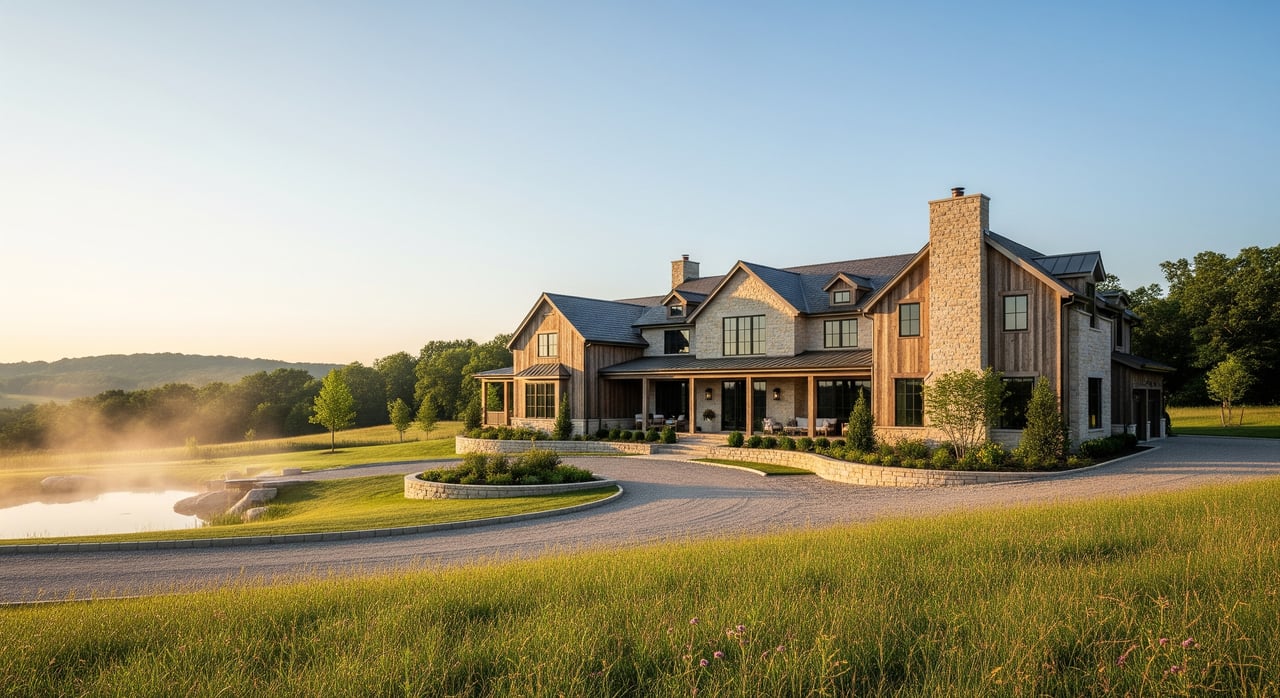
Wildwood buyers often pay a premium for privacy, wooded buffers, and long views. Water features, such as a pond or stream frontage, can add value when they support recreation or aesthetics. If any portion lies in a FEMA-designated floodplain, expect reduced usable acreage and potential insurance impacts.
Zoning and location
Zoning and subdivision covenants define what is possible. If your land can be subdivided or has flexible permitted uses, your per-acre value may be higher. If there are conservation or open-space restrictions, you should price with that in mind.
Location within West County still matters. Proximity to Chesterfield shopping and medical services, commute routes, and schools, including the Rockwood School District, influences buyer demand. Keep these facts neutral and factual when framing your price.
Evaluate improvements and amenities
After land, buyers evaluate the home and any outbuildings. Separate the value of the house from the land in your analysis.
- House: Condition, layout, finishes, and major systems (roof, HVAC) drive the improvement value. Luxury buyers expect high-function features that fit the land.
- Outbuildings: Barns, arenas, workshops, pole barns, and multi-bay garages add measurable value, especially for equestrian or hobby-farm use.
- Agricultural setup: Fenced pastures, paddocks, feed storage, and water access improve utility and broaden your buyer pool.
- Drive and frontage: Well-maintained, clearly signed driveways and good road frontage increase perceived quality and reduce buyer friction.
Build a valuation model
For acreage homes, a hybrid approach works best. Treat land and improvements as separate lines and then reconcile.
- Land value: Use local land sales to set a per-usable-acre baseline. Adjust for access, utilities, floodplain, slope, and views.
- Improvement value: Use recent sales of similar homes or cost to reproduce less depreciation to estimate contributory value.
- Hybrid or residual: If direct comps are thin, subtract the improvement value from recent “house plus land” sales to estimate land value, or vice versa.
Consider obtaining a pre-listing appraisal from a local appraiser experienced with rural and estate properties when your home is unique. It helps anchor pricing and builds buyer confidence.
Select strong comparables
Choose comps the way an appraiser would. Start in Wildwood or immediately adjacent Chesterfield neighborhoods. Match usable acreage bands first, then property access and utilities. Next, match the presence of key amenities like barns, ponds, and fenced pastures.
Use the most recent 6 to 12 months of closed sales. If you must look back further, note any market changes. Where direct comps do not exist, use paired sales or cost-to-cure estimates to adjust for specific features, like the value of an arena or a new septic.
Due diligence and disclosures
Getting ahead of questions protects your price and shortens time on market. Gather these items before you list.
- Current survey and legal description to confirm boundaries and easements
- Septic permit history and a recent inspection; well yield and water quality if applicable
- Soil tests if buildability or future expansion is a question
- Roof, HVAC, and major system inspections to support improvement value
- Any conservation easements, deed restrictions, or open-space tax classifications
- Road maintenance agreements for private roads or shared drives
- FEMA flood maps and any wetlands information if water features are present
- Timber inventory if you have substantial merchantable timber
Be clear about financing impacts. A failed septic, undocumented private road, or unclear easements can shrink your buyer pool or require price concessions. If the parcel is in karst-prone areas, discuss geological risks and well vulnerability with qualified professionals, and provide documents where appropriate.
Pricing strategy in Wildwood
A disciplined plan helps you defend your number and attract serious buyers.
- Produce a split valuation: one for land, one for improvements, each with comps and notes on usable acreage.
- Develop price bands: a high, market, and probable sale price based on your evidence and anticipated time on market.
- Expect a wider negotiation range for unique estates. Some buyers will pay for privacy, views, or equestrian-ready setups. Others may ask for concessions if systems or access need work.
- Reassess as feedback comes in. If marketing shows stronger interest from a niche segment, such as equestrian buyers, tailor your messaging and pricing accordingly.
Marketing and presentation
How you present acreage shapes perceived value. Give buyers clarity and confidence.
- Aerials and maps: Use professional aerial photography and include mapped parcel boundaries. Show usable acreage, building sites, and key amenities.
- Access and sight lines: Maintain the driveway, trim overgrowth, and stage entry features. Clean paddocks and neatly maintained pastures tell a strong story.
- Buyer packet: Provide the survey, parcel maps, septic and well reports, HOA or private road agreements, recent utility bills, and any environmental or forestry reports.
- Key highlights: Mention location context, commute access, proximity to Chesterfield services, nearby trails and conservation areas, and any recent investments in the home or outbuildings.
- Seasonality: Leaf-on photos emphasize privacy and wooded buffers. Leaf-off images reveal topography and potential build areas. Spring and early summer often showcase land at its best, but always weigh current local sales trends.
Pre-listing seller checklist
Use this list to organize documents and data before you go to market.
- Current survey and legal description
- Septic inspection, permits, and maintenance records; well log and water test
- Parcel tax history and documents for any conservation or open-space classification
- HOA or private road maintenance agreements
- Building permit history, roof/HVAC ages, and receipts for major improvements
- Timber inventory or forestry reports if relevant
- Recent comparable sales with notes on acreage, amenities, and your adjustments
- Aerial photos, site plan, and a map showing usable acreage and key features
How The Benes Group helps
Selling an acreage home requires precision. You want a team that knows Wildwood and West County estates, understands how appraisers think, and can execute a premium, low-stress plan. The Benes Group brings senior-level expertise, RealTrends-verified performance, and white-glove service tailored to upper-tier properties.
Here is what you can expect:
- Concierge preparation: project management with pre-listing renovation financing through RealVitalize and professional staging partnerships
- Purpose-built launch: pocket listings and coming-soon activations that create scarcity and early demand
- Comp-driven pricing: a land-and-improvement analysis and guidance from local data, MLS activity, and appraisal-minded methodology
- Elevated exposure: a LuxuryPresence-powered digital hub and Coldwell Banker Global Luxury distribution to reach qualified local and out-of-area buyers
If you are weighing next steps, we will help you assemble the right documents, define usable acreage, and price with confidence.
Ready to talk strategy for your Wildwood acreage home? Connect with The Benes Group to Request a Complimentary Home Valuation.
FAQs
What drives per-acre value in Wildwood?
- Usable acreage, access type, utilities, topography and soils, floodplain, views, and any restrictions are the main drivers, with premiums for privacy and well-placed amenities.
How do private roads affect pricing?
- Private roads can lower value if maintenance agreements are unclear or costs are high; having documented access and responsibilities helps preserve price.
Do I need a new survey before listing an acreage home?
- A current survey confirms boundaries and easements, reduces risk, and speeds underwriting; it is a smart pre-listing investment for acreage properties.
How does septic or well condition impact financing?
- Many lenders require functional, permitted systems; failed or undocumented systems can delay closing and lead to price concessions or repairs.
When is the best time to list acreage in Wildwood?
- Spring and early summer often show land at its best, but you should base timing on recent local sales data and your property’s readiness and presentation.
What documents do acreage buyers ask for most?
- Survey and parcel maps, septic and well reports, road agreements, any restrictions or easements, recent utility bills, and clear notes on usable acreage are top requests.